


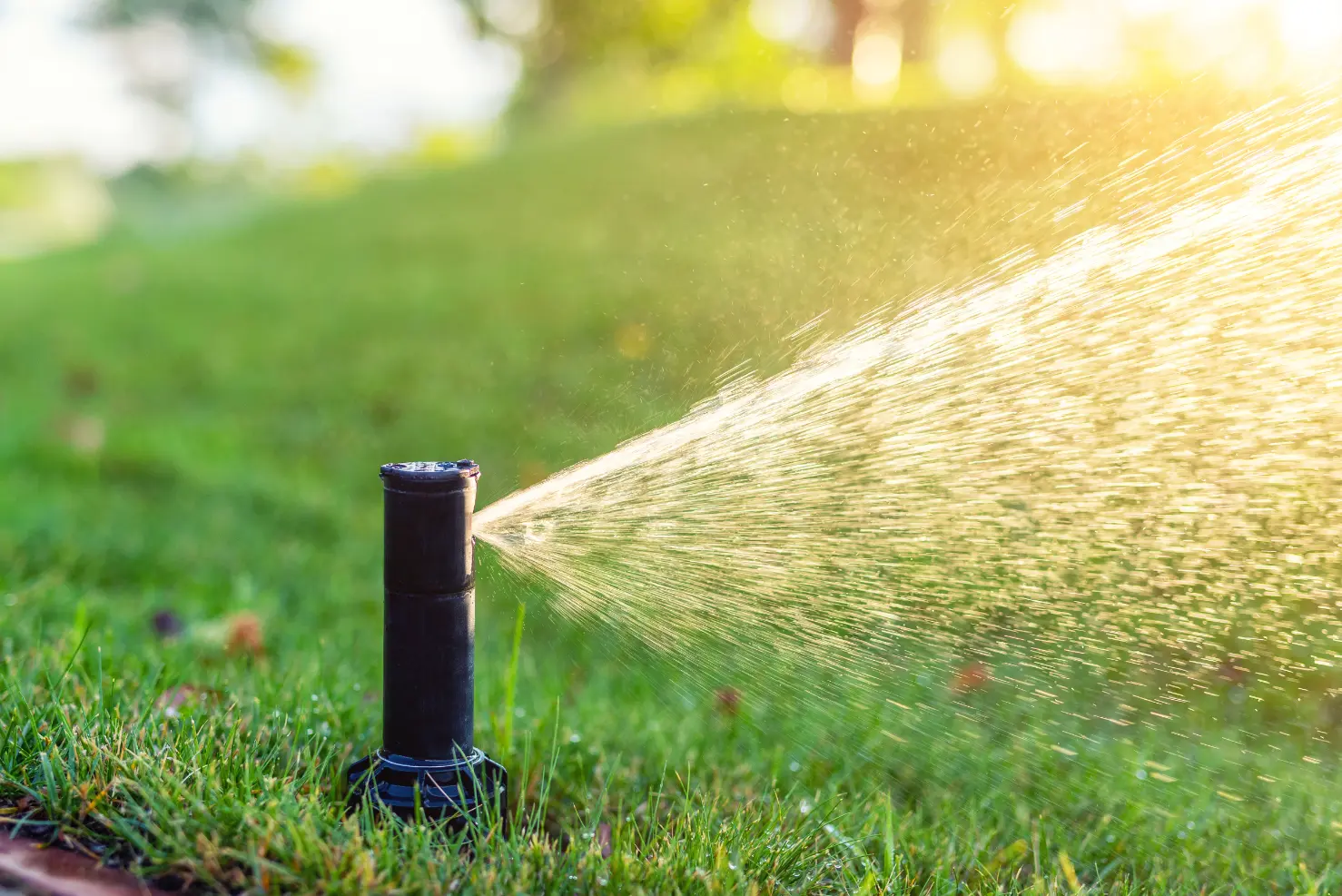
Citrus, ash, and elm trees can bring shade, fruit, and a mature look to Valley properties, but they are not naturally suited to surviving the Sonoran Desert without supplemental irrigation. In Phoenix, intense summer heat, infrequent rainfall, hard soils, and rapid evaporation make proper watering especially important for these higher-water-use trees.
Quick answer: Non-native trees in Phoenix generally do best with deep watering that reaches the active root zone rather than frequent, shallow irrigation. Established high-water-use trees may need irrigation roughly every 7 to 10 days during summer and less frequently during cooler seasons, with the actual schedule adjusted for species, soil, tree size, weather, and irrigation method. Water should cover a broad area beneath and beyond the canopy instead of concentrating around the trunk.
What local readers should know
-
Deep, less-frequent irrigation encourages a larger root zone and is generally preferable to shallow daily watering for established trees.
-
Phoenix guidance recommends watering established high-water-use trees to approximately 24 to 36 inches deep.
-
Citrus has its own irrigation requirements and should not simply be placed on the same schedule as desert-adapted trees.
-
Clay-heavy or compacted Valley soils may absorb water slowly, making runoff and uneven irrigation common concerns.
-
Irrigation placement should move outward as a tree grows because important absorbing roots extend well beyond the trunk.
Why Does Proper Watering Matter So Much for Non-Native Trees in Phoenix?
Proper watering matters for non-native trees in Phoenix because citrus, ash, and elm must cope with extreme heat and low rainfall while relying heavily on supplemental irrigation. A schedule that works for palo verde or other desert-adapted plants may not provide enough moisture for a higher-water-use tree.
The City of Phoenix notes that the area experiences hard soils and infrequent rainfall, conditions that favor desert-adapted landscaping. It also reports that temperatures reach or exceed 100°F on about 90 days per year.
That creates a difficult environment for trees accustomed to more moderate conditions. From central Phoenix neighborhoods to properties across Maricopa County and the West Valley, irrigation often becomes the primary source of dependable moisture.
Treelation LLC works with trees in these demanding Arizona conditions. When we evaluate a tree, watering is one part of the larger picture that can include canopy condition, soil, irrigation placement, and signs of stress.
What Do Local Watering Guidelines Recommend?
Local guidance emphasizes watering trees deeply, spreading water across the root zone, and adjusting irrigation frequency with the seasons rather than following one year-round schedule. City of Phoenix watering guidance lists a typical root depth of 24 to 36 inches for established trees.
For established high-water-use trees, the city’s landscape watering guide provides these general frequency ranges:
-
Spring: every 7 to 12 days
-
Summer: every 7 to 10 days
-
Fall: every 7 to 12 days
-
Winter: every 14 to 30 days
These are guidelines, not a prescription for every ash, elm, or citrus tree. Soil type, establishment, tree size, weather, and irrigation output all affect the appropriate schedule.
University of Arizona Cooperative Extension similarly recommends deep, infrequent irrigation for trees and notes that much of the active water absorption occurs around the drip line and beyond rather than immediately beside the trunk.
How Should Citrus Trees Be Watered in the Phoenix Area?
Citrus trees should receive enough water to wet a broad root zone from around the tree outward to and beyond the canopy, while allowing the upper soil to dry between irrigations. University of Arizona Cooperative Extension recommends wetting citrus soil to at least two feet deep and adjusting frequency for season and soil.
For citrus at least three years old under basin or flood irrigation, University of Arizona guidance lists approximate intervals of 10 to 14 days during July through September and 21 to 30 days during December through February. Drip and microsprinkler systems can require different intervals because they deliver water at lower volumes.
Citrus owners in Phoenix, Glendale, Peoria, and nearby Valley communities should also watch for leaf curling, which can be an early sign of water stress. Constantly wet soil is not the answer. Excess moisture can create its own root problems.
What Are the Warning Signs of Poor Tree Watering?
Poor tree watering can show up as changes in leaves, soil moisture, canopy condition, or irrigation performance, and both too little and too much water can stress a tree. The pattern matters because some symptoms associated with drought can resemble symptoms caused by unhealthy roots.
Watch for:
-
Wilting or curling leaves during periods of high heat
-
Older leaves yellowing, browning, or dropping
-
Soil that remains dry well below the surface after irrigation
-
Soil that stays constantly wet between watering cycles
-
Light green or yellow young foliage
-
Brittle green leaves or wilted shoots
-
Water pooling near the trunk instead of spreading through the root zone
-
Emitters that no longer reach the expanding canopy and root area
A single hot afternoon is not always enough to diagnose an irrigation problem. Look at soil moisture and the tree’s overall condition before simply adding more watering days.
When Should You Call a Tree Professional?
Call a tree professional when irrigation adjustments do not resolve continuing canopy decline, branch dieback, abnormal leaf loss, or other signs that suggest the problem may extend beyond watering. Trees can decline from multiple interacting causes, so increasing irrigation without identifying the cause can make some problems worse.
Homeowners can safely inspect emitters, check for obvious leaks, and use a soil probe to see how deeply water is penetrating. University of Arizona guidance suggests monitoring soil penetration because irrigation needs to reach the root zone rather than merely wetting the surface.
If a mature ash, elm, or citrus continues declining despite appropriate soil moisture, a broader tree assessment is appropriate.
What Common Watering Problems Affect Valley Trees?
The most common watering problems for Valley trees involve shallow irrigation, poor water distribution, seasonal scheduling errors, and soil conditions that prevent water from reaching roots evenly. Phoenix landscapes frequently combine mature trees, drip systems, rock landscaping, turf, and compacted soils, which can complicate irrigation.
1. Shallow, frequent watering
Short daily irrigation may wet only the upper soil. Trees have much deeper root zones than small landscape plants.
2. Emitters concentrated near the trunk
A system installed when a tree was young may still have emitters clustered around its original planting area. As the canopy expands, irrigation coverage should expand with it.
3. A year-round timer setting
Phoenix water demand changes dramatically between January and July. The City of Phoenix recommends changing irrigation based on weather and season rather than leaving the controller untouched.
4. Runoff from slow-draining soil
Water may move across the surface before penetrating deeply enough, particularly where soil infiltration is slow.
5. Treating every tree alike
A citrus tree and a desert-adapted palo verde do not necessarily belong on the same irrigation schedule. Grouping plants with very different water requirements can leave one overwatered and another thirsty.
How Can Phoenix Homeowners Improve Tree Watering?
Phoenix homeowners can improve tree watering by checking irrigation depth, expanding water distribution as trees mature, adjusting schedules seasonally, and avoiding unnecessary watering after meaningful rainfall. The goal is to wet the root zone thoroughly and then allow appropriate drying before irrigating again.
Check your system several times per year, particularly as temperatures climb in late spring and when conditions change during monsoon season. Look for clogged or broken emitters and verify that water is reaching more than one small area.
Watering between sundown and sunrise can also reduce evaporation. City guidance recommends watering large plants such as trees deeply and placing irrigation around the canopy area rather than immediately against the trunk.
What Results Can You Expect From Better Irrigation?
Better irrigation can give a tree more consistent access to moisture throughout its active root zone, but correcting the watering schedule cannot reverse every existing tree problem. Trees already experiencing significant canopy decline, root damage, pests, disease, or structural problems may require additional evaluation.
Changes in tree condition can also take time. The practical goal is to create a watering pattern appropriate for the species, soil, season, and maturity of the tree rather than trying to force an immediate visual response with excessive water.
What Watering Mistakes Should Local Property Owners Avoid?
Local property owners should avoid responding to every sign of stress by watering more often because excessive irrigation can be just as problematic as insufficient irrigation. Checking the soil and irrigation system provides better information than guessing from the surface.
Mistake: Watering for a few minutes every day.
Consequence: Moisture may remain near the surface instead of reaching deeper tree roots.
Better approach: Determine how long the system must operate to wet the intended root zone.
Mistake: Keeping emitters beside the trunk.
Consequence: A mature tree’s wider root system receives uneven irrigation.
Better approach: Expand irrigation coverage outward as the canopy grows.
Mistake: Never changing the controller.
Consequence: Winter watering can become excessive or summer watering inadequate.
Better approach: Adjust frequency according to Valley weather and season.
What Is a Common Local Tree-Watering Scenario?
A common local scenario is a mature tree with a drip system that still waters roughly the same small area it did years earlier. The canopy has expanded, but the irrigation layout has not.
A homeowner may see thinning foliage during summer and respond by running those same emitters more frequently. That adds water without necessarily improving distribution.
A better response is to inspect where the water actually goes, how deeply it penetrates, and whether the irrigation footprint corresponds to the current root zone.
What Tree Services Can Help With Watering-Related Concerns?
Professional tree assessment can help determine whether declining foliage or canopy changes are consistent with irrigation stress or whether other tree-health and structural concerns should be investigated. Watering is important, but it should not become the automatic explanation for every struggling tree.
We can evaluate the visible condition of citrus, ash, elm, and other landscape trees and help property owners understand when tree care may be needed.
Is DIY Watering Adjustment or Professional Evaluation the Better Option?
DIY irrigation adjustments are appropriate for straightforward issues such as seasonal timer changes or obvious emitter problems, while persistent tree decline is better evaluated professionally. The dividing line is whether you understand the problem well enough to make a targeted correction.
Checking soil depth, observing irrigation coverage, and repairing a clearly clogged emitter are reasonable homeowner tasks. Continued dieback, substantial canopy thinning, damaged limbs, or unexplained decline warrants a closer look rather than repeated watering changes.
Where Does This Advice Apply?
This watering guidance is most relevant to Phoenix and surrounding low-desert communities in Maricopa County where high temperatures and limited rainfall create similar challenges for non-native trees. Comparable conditions occur throughout much of the Valley, including Glendale, Peoria, and the West Valley toward Surprise.
Local soil, irrigation design, property exposure, and tree species still need to guide individual decisions.
What Can Happen If Watering Problems Continue?
Uncorrected watering problems can contribute to continuing tree stress, canopy decline, wasted water, and poor root conditions, particularly during prolonged Valley heat. Waiting also makes it harder to determine whether irrigation is the primary issue when other tree-health problems are developing at the same time.
Correcting distribution and scheduling early is generally easier than responding after substantial canopy decline appears.
FAQ
How often should I water a mature tree in Phoenix?
Established high-water-use trees in Phoenix may need water approximately every 7 to 10 days in summer and every 14 to 30 days in winter under City guidance. These are starting ranges. Soil, species, tree size, irrigation output, recent rainfall, and unusually hot or cool weather can justify adjusting the interval.
How deep should I water trees in Phoenix?
Established trees should generally be watered deeply enough to reach approximately 24 to 36 inches into the root zone. The City of Phoenix uses this range for trees in its landscape watering guidance. Check actual penetration with a soil probe because a long irrigation runtime does not automatically mean water is reaching the desired depth.
Should citrus trees in Phoenix be watered every day in summer?
Established citrus trees generally should not be watered every day in Phoenix. University of Arizona guidance favors deeper irrigation with drying between applications. Exact intervals depend on age, soil, weather, and irrigation method, so newly planted citrus and mature trees should not automatically receive the same schedule.
Where should I place water around a mature tree?
Water should be distributed through the active root zone around the canopy rather than concentrated against the trunk. University of Arizona guidance identifies the drip line and areas beyond it as important locations for water absorption. As a Valley tree grows, its irrigation layout should be expanded to match its increasing root area.
Does monsoon rain mean I can skip watering?
Meaningful monsoon rainfall can allow Phoenix-area property owners to delay scheduled irrigation, depending on how much moisture actually reaches the root zone. City water-conservation guidance recommends turning irrigation off when it rains and watering according to weather. Check soil moisture instead of assuming a brief storm thoroughly watered a mature tree.
Can you overwater ash or elm trees in the desert?
Yes, desert heat does not make overwatering impossible. Constantly wet soil can deprive roots of healthy soil conditions, while unnecessary irrigation wastes water. University of Arizona guidance lists continuously damp soil, algae or mushrooms, yellow young leaves, and certain wilt symptoms among possible indications of excessive watering.
Why is my Phoenix citrus tree curling its leaves?
Leaf curling can be an early sign of water stress in citrus, according to University of Arizona Cooperative Extension. Before increasing irrigation, check moisture below the surface and confirm that water reaches the broader root zone. Heat, irrigation distribution, and other tree-health problems should also be considered when symptoms persist.
Should trees and shrubs use the same drip schedule in Maricopa County?
Trees and shrubs generally should not automatically share identical irrigation schedules because their root depths and water requirements differ. City guidance lists deeper typical root zones for trees than shrubs. Separating plants into appropriate irrigation zones makes it easier to deliver enough water without unnecessarily overwatering shallower-rooted landscaping.
Help Your Valley Trees Handle the Desert
Citrus, ash, and elm trees can be valuable parts of a Phoenix-area landscape, but successful desert care requires more than simply turning the irrigation on more often. Deep watering, proper distribution, seasonal adjustments, and attention to the tree’s actual condition provide a better foundation for long-term care.
Protect Your Trees Through the Next Phoenix Season
We help local property owners identify tree concerns and make informed decisions about appropriate care.