


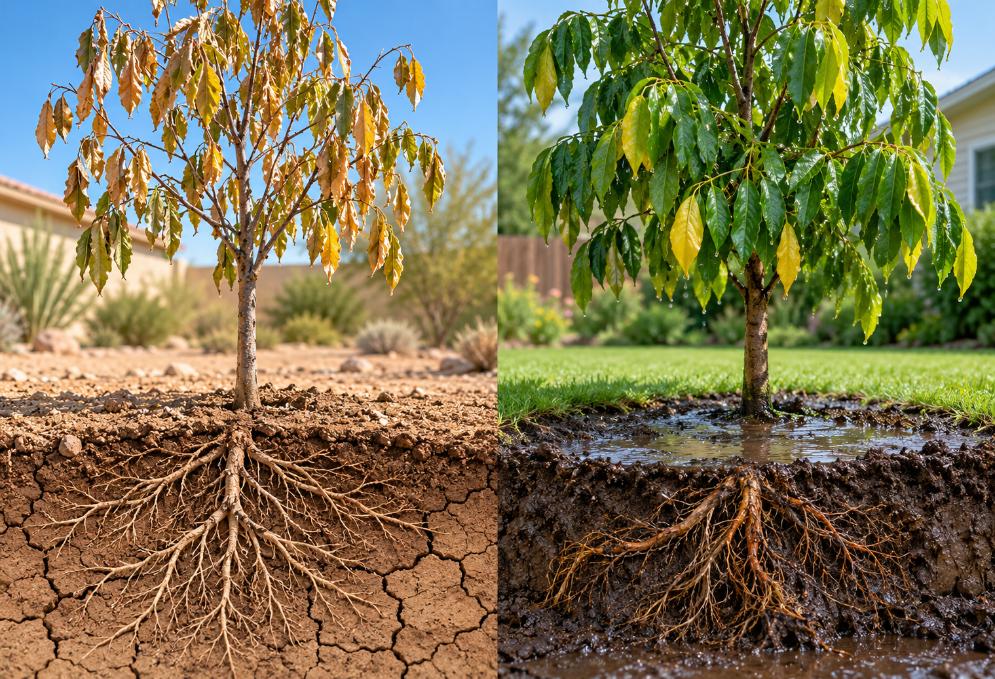
A struggling tree in Surprise, AZ can look thirsty even when its roots are sitting in too much water. Wilted leaves, yellowing foliage, branch decline, and premature leaf drop can appear with both drought stress and overwatering, which makes simply adding more irrigation a risky response.
The difference usually becomes clearer when you look below the canopy and check the soil, irrigation pattern, root zone, and timing of the symptoms.
Quick answer: Drought-stressed trees generally have dry soil through much of the root zone, leaves that wilt or curl, and older foliage that browns or drops. Overwatered trees tend to remain in consistently wet soil and may develop pale new growth, brittle green leaves, root problems, or decline despite frequent irrigation. In the low desert, the safest approach is usually deep, properly spaced watering rather than frequent shallow watering.
What local property owners should know
-
A tree can look wilted from both too little water and too much water, so symptoms alone do not always identify the problem.
-
Surprise landscapes experience intense summer heat, making adequate deep irrigation especially important for trees that are not fully established.
-
University of Arizona Cooperative Extension recommends directing irrigation through the root zone rather than concentrating water against the trunk.
-
Monsoon rainfall can temporarily change soil moisture, so irrigation schedules should respond to actual conditions instead of running unchanged all year.
-
Checking soil moisture before increasing watering can help prevent turning drought stress into an overwatering problem.
Why Does the Difference Between Drought Stress and Overwatering Matter in Surprise?
Knowing whether a tree is dry or overwatered matters in Surprise because both conditions can damage roots, weaken growth, and produce similar above-ground symptoms, but they require opposite corrections. Adding water to already saturated soil can make the situation worse, while reducing irrigation around a genuinely drought-stressed tree can accelerate decline.
Our region combines prolonged summer heat, intense sunlight, low humidity, desert-adapted landscapes, and periods of monsoon rainfall. Maricopa County also regularly experiences extreme summer temperatures. Those conditions make irrigation management especially important around homes in areas such as Marley Park, Sun City Grand, Asante, Sierra Montana, and neighborhoods near the White Tank Mountains.
Treelation LLC helps local property owners evaluate tree health problems with the conditions of the West Valley in mind. We look beyond the appearance of the leaves because irrigation placement, soil moisture, root conditions, tree species, and seasonal weather all help explain what a stressed tree is actually experiencing.
What Does Local Watering Guidance Say About Trees?
Local watering guidance favors deep, less frequent irrigation that reaches a tree’s root zone instead of frequent shallow watering near the trunk. The City of Surprise has specifically encouraged deep summer watering and notes that trees generally need moisture to reach deeper soil than smaller landscape plants.
University of Arizona Cooperative Extension similarly explains that much of a tree’s active water absorption occurs around the drip line and beyond rather than immediately beside the trunk. Its guidance recommends adjusting irrigation for weather, soil type, plant maturity, and season.
This matters because an irrigation system can run regularly without actually watering a mature tree effectively. Emitters installed beside a young tree may remain in the same location for years even while the root system expands outward.
What Are the Signs of Drought Stress?
Drought stress usually shows up as dry root-zone soil combined with wilting, curling, browning, or premature loss of foliage. In Surprise, these symptoms can intensify during extended hot, dry periods when a tree is losing moisture faster than its irrigation system replaces it.
Watch for:
-
Dry soil several inches below the surface after the irrigation cycle should have soaked the area
-
Wilting or curling foliage
-
Older leaves turning yellow or brown
-
Premature leaf drop
-
Dry or scorched-looking leaf edges
-
Sparse canopy growth
-
Small twigs or branches beginning to die back
-
Drip emitters that no longer reach enough of the expanding root zone
Drought stress does not always mean the irrigation controller needs more watering days. Sometimes the real problem is inadequate coverage, clogged emitters, short run times, runoff, or water being applied too close to the trunk.
What Are the Signs of Overwatering?
Overwatering is more likely when soil stays wet for long periods and the tree declines even though irrigation is frequent. Roots need both moisture and oxygen, so consistently saturated conditions can interfere with healthy root function.
Possible warning signs include:
-
Soil that remains constantly damp
-
Pale green or yellow young foliage
-
Wilted shoots despite wet soil
-
Green leaves that feel unusually brittle
-
Algae or mushrooms in persistently damp areas
-
Water pooling around the tree
-
Irrigation running very frequently for short periods
-
Decline that begins after watering frequency is increased
Rock mulch can make the situation harder to judge because the surface may look completely dry while deeper soil remains moist. Checking below the surface is more useful than judging by appearance alone.
How Can You Check Whether a Tree Actually Needs Water?
You can get a better picture of a tree’s water needs by checking moisture below the soil surface and determining how deeply irrigation is penetrating. A dry top inch of desert soil does not necessarily mean the entire root zone is dry.
After watering, a soil probe or similar smooth tool can help indicate how deeply moisture has traveled. University of Arizona Cooperative Extension recommends checking the wetted root zone because a probe generally moves more easily through moist soil and becomes harder to push when it reaches dry soil.
For trees, the goal is not to keep the ground constantly wet. The goal is to wet the appropriate root zone thoroughly and then allow time between irrigation cycles according to the tree, soil, season, and weather.
What Commonly Causes Watering Problems in Surprise?
The most common watering problems in Surprise involve shallow irrigation, poor emitter placement, unchanged seasonal schedules, drainage conditions, and misunderstanding visible stress symptoms. Extreme heat often gets blamed automatically, but the irrigation pattern itself deserves inspection.
1. Frequent shallow watering
Short daily watering may wet only the upper soil instead of encouraging moisture deeper into the root zone.
2. Emitters too close to the trunk
As trees grow, their absorbing roots extend outward. Irrigation that remains concentrated against the trunk may no longer serve enough of the active root system.
3. Summer settings used year-round
City water conservation guidance encourages residents to adjust watering with the seasons. A schedule suited to June may be excessive after temperatures fall or following meaningful rainfall.
4. Monsoon moisture plus automatic irrigation
A strong monsoon storm can add moisture while an automatic controller continues its normal cycle. The combination can leave some soils wetter than expected.
5. Compacted or slow-draining soil
Water may penetrate slowly or remain concentrated in portions of the root zone. Running irrigation longer without evaluating infiltration can produce runoff or saturation rather than useful deep watering.
How Can You Prevent Both Drought Stress and Overwatering?
Preventing both problems requires watering deeply enough to reach the root zone, checking soil moisture between cycles, and adjusting irrigation as weather and trees change. A fixed schedule is less useful than one that reflects actual landscape conditions.
For West Valley properties, practical maintenance includes checking emitters before peak summer heat, moving or adding emitters as trees mature, looking for leaks or clogged lines, and reassessing irrigation after monsoon storms.
Water should generally be distributed through the root zone rather than pooled against the trunk. The City of Surprise also encourages seasonal irrigation adjustments and water-wise landscape practices.
DIY checks can identify obvious irrigation issues, but persistent canopy decline, significant branch dieback, suspected root problems, or uncertainty about a valuable mature tree deserves a closer professional evaluation.
When Should You Call a Tree Professional?
Call a tree professional when correcting an obvious irrigation issue does not improve the tree, significant dieback is developing, or you cannot confidently determine whether the root zone is too wet or too dry. Water stress can overlap with insects, disease, root damage, planting problems, and other tree-health issues.
Professional evaluation is especially useful when a large shade tree near a home, driveway, sidewalk, wall, or outdoor living area begins declining. A stressed tree may have more than one contributing problem, so changing the controller without evaluating the tree itself may not address the underlying cause.
What Results Can You Expect After Correcting the Watering Problem?
Correcting irrigation can improve growing conditions, but recovery depends on the tree species, severity and duration of stress, root condition, season, and whether other problems are present. Existing damaged leaves may not return to normal even after the cause is corrected.
Instead, look for stabilization over time, healthier new growth, improved canopy density, and reduced progression of dieback. Severely damaged roots or branches may require additional tree care.
Patience is particularly important during the hottest part of the year. Avoid repeatedly changing the irrigation schedule based only on how leaves look from one day to the next.
What Watering Mistakes Cause the Most Trouble?
The biggest watering mistakes are reacting to wilt by immediately adding water, relying only on surface soil, and assuming more frequent irrigation always provides better hydration.
Mistake: Increasing irrigation every time leaves wilt.
Consequence: A tree already suffering from overly wet soil receives even more water.
Better approach: Check root-zone moisture first.
Mistake: Watering directly against the trunk.
Consequence: Water misses much of the expanding root system and may keep the trunk area unnecessarily wet.
Better approach: Distribute irrigation outward through the root zone.
Mistake: Leaving the controller unchanged all year.
Consequence: Trees may receive too little during extreme heat or too much during cooler periods and wet weather.
Better approach: Adjust watering seasonally.
What Is a Common Local Tree-Watering Scenario?
A common local scenario is a mature landscape tree showing wilted or thinning foliage during summer even though the irrigation system runs several times each week. The homeowner assumes extreme Surprise heat means the tree needs another watering day.
A closer check may reveal that several small emitters are still clustered near the trunk while the canopy and roots have expanded far beyond them. The system is technically running often, but much of the active root zone remains dry.
The opposite can happen after irrigation is increased repeatedly. Soil around part of the root zone stays saturated, yet the stressed foliage continues. That is why diagnosing the moisture pattern matters before changing the schedule.
How Do DIY Irrigation Adjustments Compare With Professional Tree Evaluation?
DIY checks are useful for obvious irrigation problems, while professional evaluation is more appropriate when symptoms are severe, persistent, or difficult to explain.
A homeowner can safely inspect emitters, look for leaks, note standing water, check soil moisture, and review controller settings. Those observations often provide valuable clues.
Professional tree care becomes more useful when the canopy is rapidly thinning, branches are dying, roots appear damaged, the tree has structural concerns, or watering corrections fail to stop the decline. Our role is to help separate irrigation stress from other potential tree-health problems so the next step is based on what the tree actually needs.
What Is the Cost of Ignoring Water Stress?
Ignoring prolonged water stress can lead to continued canopy decline, branch dieback, root deterioration, wasted water, and potentially more extensive tree care later. The goal is not to create urgency around every yellow leaf but to address a persistent pattern before avoidable stress becomes more severe.
For properties throughout Surprise and nearby West Valley communities, healthy irrigation practices can also reduce unnecessary water use while helping established trees handle demanding desert conditions.
What Areas Do We Serve?
We provide tree care support for property owners in Surprise and surrounding West Valley communities. Local conditions across Maricopa County, including extreme heat, desert soils, expanding landscapes, and seasonal monsoon weather, make irrigation and tree health closely connected.
FAQ
Can an overwatered tree look like it needs more water in Surprise?
Yes, an overwatered tree can look thirsty because damaged or oxygen-starved roots may not function normally. Wilted foliage does not automatically mean dry soil. Before adding another irrigation cycle, check several areas of the root zone below the surface to determine whether the soil is actually dry or remains wet.
How often should I water a tree in Surprise, AZ?
Tree watering frequency should be based on species, maturity, soil, season, weather, and irrigation depth rather than a single year-round schedule. City of Surprise guidance emphasizes deep watering and seasonal adjustment. Established desert-adapted trees generally benefit from deeper, more widely spaced irrigation rather than constant shallow watering.
Should I water a tree every day during extreme Maricopa County heat?
Daily watering is not automatically the best response to extreme heat, especially for established trees. Frequent shallow irrigation may fail to wet the deeper root zone. Check how deeply water penetrates and consider tree maturity, soil conditions, and species before increasing frequency.
Does monsoon rain mean I should turn off my irrigation?
Meaningful monsoon rainfall may justify delaying or adjusting irrigation, but the decision should be based on soil moisture and how much rain reached the root zone. A brief storm may wet only the surface, while a heavier event can provide deeper moisture. Check conditions instead of relying solely on rainfall appearance.
Why is the soil dry on top but wet underneath?
The desert surface can dry quickly while deeper soil still contains moisture. Sun, heat, wind, and rock landscaping can make the upper layer appear dry soon after watering. In Surprise landscapes, checking several inches below the surface gives a more useful picture of what tree roots are experiencing.
Where should drip emitters be placed around a mature tree?
Emitters should generally distribute water through the active root zone rather than remain clustered against the trunk. University of Arizona Cooperative Extension notes that important absorbing roots occur around the drip line and beyond. As a tree grows, irrigation placement should be reassessed and expanded.
Can overwatering cause yellow leaves on desert trees?
Yes, excessive moisture can contribute to pale or yellow foliage, particularly when roots remain in persistently wet soil. Yellow leaves can also result from other tree-health problems, so moisture conditions should be checked before assuming irrigation is the only cause.
When should a West Valley homeowner get a stressed tree inspected?
An inspection is worth considering when significant branch dieback, rapid canopy thinning, persistent wilting, or unexplained decline continues after obvious irrigation issues are corrected. Large trees near homes and other improvements also deserve timely attention when declining branches or overall tree condition becomes a concern.
Help Your Trees Get the Water They Actually Need
Distinguishing drought stress from overwatering starts with the root zone, not just the leaves. By checking soil moisture, irrigation depth, emitter placement, and seasonal conditions, local property owners can make better decisions about stressed trees in the desert.
Protect Your Surprise Trees With the Right Diagnosis
We can help evaluate whether irrigation, root conditions, or another tree-health issue may be contributing to the problem.