


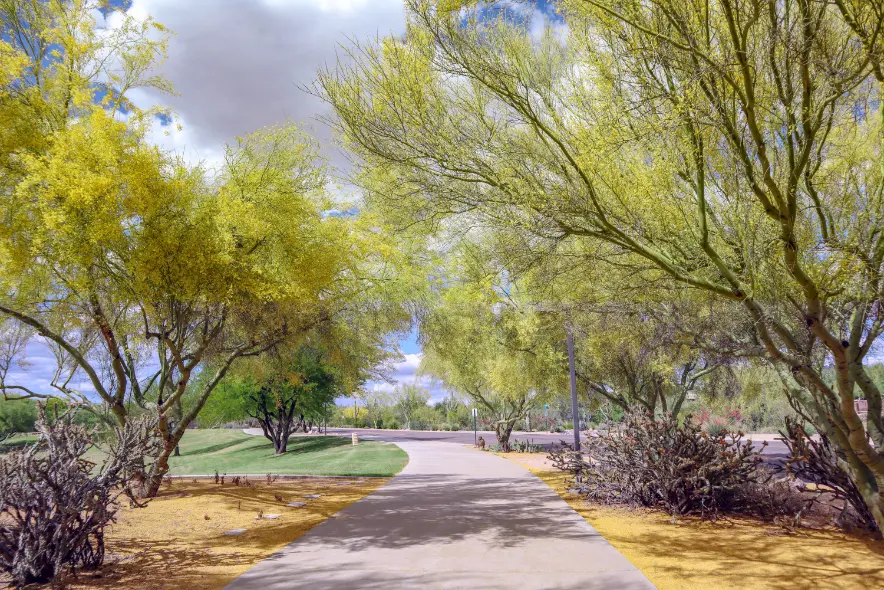
Trees are one of the most valuable features of any landscape, but keeping them healthy in the Sonoran Desert takes more than occasional watering. In Phoenix, intense summer heat, low humidity, and extended dry periods mean trees rely on proper irrigation to develop deep, resilient root systems instead of shallow roots that struggle during extreme weather.
Quick Answer
The 1-2-3-4 Rule is a simple watering guideline that helps homeowners match deep watering times to tree size. Smaller trees need less watering time, while mature trees require longer, slower soaking to encourage deep root growth. In the Phoenix area, watering deeply and less frequently is generally healthier than watering lightly every day because it trains roots to grow deeper where moisture lasts longer.
What Local Readers Should Know
-
The 1-2-3-4 Rule helps encourage stronger root systems that better withstand Arizona’s extreme heat.
-
Clay soils found throughout much of Maricopa County absorb water differently than sandy desert soils, making slow watering especially important.
-
Summer monsoon storms rarely provide enough consistent moisture to replace scheduled deep watering.
-
Trees growing in neighborhoods such as Ahwatukee, Arcadia, Desert Ridge, and North Phoenix often experience different irrigation conditions depending on soil, slope, and landscape design.
-
Mature shade trees typically need wider watering coverage than most homeowners realize because roots extend well beyond the canopy.
Why This Matters Locally
Proper watering is one of the biggest factors affecting tree health in Phoenix. Long stretches of triple digit temperatures place significant stress on both native and ornamental trees. Combined with reflective heat from concrete, decorative rock landscaping, and compacted soils, improper irrigation often leads to declining canopies, weak growth, and increased susceptibility to pests and disease.
Treelation LLC helps homeowners throughout the Phoenix area understand how proper watering supports healthier, longer-living trees. We regularly see beautiful landscapes struggle simply because irrigation schedules do not match the needs of mature desert trees.
Local Data and Field Observations
Professional arborists across the Valley consistently observe that underwatering and frequent shallow watering are among the most common causes of declining landscape trees. Local irrigation schedules often require seasonal adjustments because temperatures can vary dramatically between winter and summer. While occasional rainfall helps, extended periods without meaningful precipitation mean irrigation remains the primary water source for most residential trees.
Local Impact
Improper watering affects much more than appearance.
Trees receiving too little deep moisture may develop sparse canopies, branch dieback, smaller leaves, and slower growth. Overwatered trees can experience root problems, fungal issues, and poor structural stability. In neighborhoods throughout Scottsdale, Paradise Valley, Mesa, Chandler, and Glendale, mature shade trees also play an important role in reducing surface temperatures around homes.
Healthy trees provide cooler outdoor spaces, improve curb appeal, and contribute to long-term property value.
Warning Signs Your Tree May Need Better Deep Watering
Common warning signs include:
-
Leaves becoming smaller than normal.
-
Branch tips beginning to die back.
-
Early leaf drop during the growing season.
-
Yellowing foliage without obvious pest damage.
-
Cracked or dry soil around the root zone.
-
Surface roots becoming increasingly visible.
-
Sparse canopy compared to previous seasons.
These symptoms do not always indicate watering problems alone, but they often signal that a professional evaluation is worthwhile.
When to Call a Professional
Trees showing ongoing decline despite regular watering should be professionally evaluated. Large established trees, trees near foundations, and trees damaged by storms or construction often require more than simple irrigation adjustments.
Homeowners can safely monitor soil moisture, inspect emitters, and adjust watering schedules. Diagnosing root problems, structural issues, or disease is generally best left to trained professionals.
Common Local Causes of Poor Tree Watering
1. Watering Too Frequently
Daily shallow watering keeps moisture near the surface and encourages shallow roots that struggle during heat waves.
2. Watering Too Close to the Trunk
Most absorbing roots are located farther from the trunk. Concentrating irrigation at the base leaves much of the root system dry.
3. Decorative Rock Landscapes
Rock absorbs and reflects heat, increasing soil temperatures and moisture loss during Phoenix summers.
4. Seasonal Irrigation Settings
Many irrigation controllers remain on winter schedules well into spring or continue summer schedules into cooler months.
5. Different Soil Types
Properties throughout the Valley contain varying combinations of clay, caliche, and sandy soils, all of which absorb water differently.
Understanding the 1-2-3-4 Rule
The 1-2-3-4 Rule provides a simple starting point for deep watering based on trunk size.
-
1 hour for young or small trees.
-
2 hours for medium-sized trees.
-
3 hours for larger established trees.
-
4 hours for mature shade trees with extensive root systems.
The goal is slow, deep soil penetration rather than surface saturation. Water should reach the majority of the active root zone while avoiding runoff.
Actual watering schedules may vary depending on tree species, irrigation system design, soil conditions, and seasonal weather.
Prevention and Maintenance
Proper tree watering is easier when combined with regular landscape maintenance.
Helpful practices include:
-
Adjust irrigation schedules as temperatures change.
-
Check emitters regularly for clogs or damage.
-
Expand watering zones as trees mature.
-
Apply mulch around the root zone while keeping it away from the trunk.
-
Monitor soil moisture before adding additional water.
-
Schedule periodic professional tree inspections.
Expected Results
Trees receiving consistent deep watering often develop healthier canopies, stronger root systems, improved drought tolerance, and better long-term stability. Results occur gradually, especially for mature trees, but consistent irrigation practices support healthier growth over time.
Common Mistakes
Mistake: Watering every day for a short period.
Consequence: Shallow roots develop close to the surface.
Better Approach: Water less frequently while allowing moisture to soak deeply.
Mistake: Only watering at the trunk.
Consequence: Most absorbing roots receive very little moisture.
Better Approach: Water throughout the root zone extending beyond the drip line whenever practical.
Mistake: Leaving irrigation schedules unchanged year-round.
Consequence: Trees may receive too much or too little water depending on the season.
Better Approach: Adjust irrigation timing throughout the year.
Common Local Scenario
A homeowner notices their mature shade tree beginning to thin during late summer despite watering several times each week. After evaluating the irrigation pattern, they discover the emitters only watered close to the trunk for short periods. Expanding the watering area and increasing deep soaking time helps provide moisture where the tree’s active roots are located.
Related Service Solutions
Healthy irrigation practices work best alongside professional tree care services such as:
-
Tree health evaluations.
-
Tree trimming.
-
Structural pruning.
-
Root zone assessments.
-
Tree risk inspections.
-
Ongoing tree maintenance plans.
Comparing Your Options
| Option | Benefits | Limitations |
|---|---|---|
| DIY Deep Watering | Affordable and easy to perform with proper guidance | Requires regular monitoring and seasonal adjustments |
| Professional Tree Assessment | Identifies watering, health, and structural concerns | Requires scheduling an inspection |
| Automatic Irrigation Adjustments | Provides consistent watering schedules | Still requires periodic inspection and maintenance |
Service Areas
We proudly help homeowners throughout Phoenix and surrounding communities including Scottsdale, Mesa, Chandler, Glendale, Tempe, Paradise Valley, Peoria, and other nearby areas throughout Maricopa County.
Cost of Ignoring the Issue
Waiting too long to correct improper watering can lead to canopy decline, weakened branches, increased maintenance costs, and shortened tree life. Catching irrigation problems early is usually simpler than addressing advanced tree stress.
Frequently Asked Questions
Does the 1-2-3-4 Rule work for every tree in Phoenix?
The 1-2-3-4 Rule provides an excellent starting point for many landscape trees in Phoenix, but watering schedules should still be adjusted for tree species, soil type, and seasonal weather.
How often should I deep water trees during Phoenix summers?
Deep watering frequency depends on the tree, soil, and irrigation system. Many established trees benefit from deeper watering rather than daily shallow irrigation during the hottest months.
Can monsoon rain replace scheduled watering?
Usually not. While monsoon storms provide temporary moisture, they are often inconsistent and rarely replace the need for regular deep watering throughout the growing season.
Why are my tree roots growing near the surface?
Surface roots often develop when irrigation remains shallow. Deep watering encourages roots to grow farther into the soil where moisture remains available longer.
Should mature trees receive more water than young trees?
Yes. Mature trees generally require larger watering zones and longer soaking periods because their root systems cover much more ground.
Is decorative rock affecting my trees in Phoenix?
Decorative rock can increase soil temperatures and moisture loss during hot weather. Proper irrigation becomes even more important when rock landscaping surrounds trees.
Can overwatering hurt desert trees?
Yes. Too much water can reduce oxygen in the soil, contribute to root problems, and weaken overall tree health.
When should I have my trees professionally evaluated?
If your tree shows ongoing leaf loss, branch dieback, poor growth, or continues declining despite irrigation adjustments, a professional assessment is recommended.
Keep Your Trees Healthy for Years to Come
Deep watering is one of the simplest ways to improve tree health in the Valley. Understanding how moisture reaches the root system helps trees become stronger, healthier, and better prepared for Arizona’s demanding climate.
Give Your Phoenix Trees the Care They Need
Healthy trees begin with healthy roots. Contact us today to schedule a professional tree evaluation and learn how proper watering and expert tree care can help protect your landscape for years to come.